
On 29 August, Icelanders will decide whether to reopen accession negotiations with the European Union—not whether to become members. That distinction is more than procedural. Iceland already has an unusually tailored European settlement: deep Single Market integration while retaining national control over fisheries, agriculture, currency and important elements of trade policy. Full membership would give Reykjavík a formal vote over rules it already follows extensively—but require it to negotiate the transfer of authority in some of the areas Iceland has guarded most fiercely. The referendum is therefore not simply a verdict on Europe. It is a decision about whether discovering the terms of a different sovereignty bargain is worth reopening the accession process.
42 SOURCE ITEMS · 9 CORE EVIDENTIARY CHAINS · 16 PRIMARY/OFFICIAL RECORDS · 14 SPECIALIST ICELANDIC/NORDIC SOURCES · 12 INDEPENDENT REPORTING ITEMS · 18 KEY CLAIMS TESTED |
WHY THIS STORY
On Saturday, Iceland votes on Europe. But not in the way much of the shorthand suggests.
The official question asks:
“Should negotiations on Iceland’s membership in the European Union start again?” |
The word membership is therefore explicitly on the ballot. But the legal and political decision being taken is whether Iceland should restart negotiations—not whether it should approve an accession treaty or immediately become an EU member.
That distinction matters. A voter can rationally support reopening negotiations while opposing membership under unacceptable terms. And the available polling suggests that such a constituency exists.
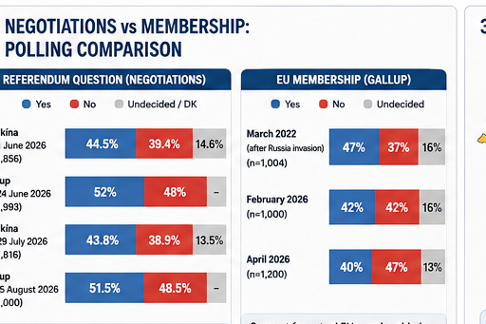
Recent surveys have generally found a narrow majority among decided voters willing to reopen negotiations. Polling on actual EU membership has been less favourable.
The difference is real, but it should not be exaggerated: the surveys were conducted at different times and with different question structures. On a broadly comparable decided-voter basis, the gap is closer to seven percentage points than the much larger difference produced by comparing decided voters in one poll with all respondents in another.
Negotiating and joining are not the same voter proposition. |
The conventional international explanation is geopolitical. Russia’s invasion of Ukraine, Arctic competition, uncertainty over US policy and recent arguments over Greenland have all changed the strategic environment facing a small North Atlantic state.
But Crosswise found no evidence that Donald Trump—or geopolitical insecurity alone—is principally responsible for the current referendum. Nor did the evidence support the competing claim that the vote is primarily a revolt against high mortgage costs and the Icelandic króna.
The deeper issue is structural. Iceland already participates extensively in European integration through the European Economic Area while remaining outside the EU.
· extensive Single Market participation
· free movement
· Schengen participation
· broad regulatory integration
while preserving national authority over areas including:
· fisheries
· agriculture
· currency
· important elements of independent trade policy
Full membership would alter that bargain. Iceland would gain formal representation inside institutions whose decisions already shape much of its economic regulation. But it would also negotiate the transfer of authority in precisely some of the areas Iceland has historically regarded as sovereign core interests.
Which kind of sovereignty matters most—and what would Iceland have to surrender to obtain more influence elsewhere? |
RESEARCH SUMMARY
Crosswise conducted two independent research passes followed by an A/B gap analysis, targeted verification and a hostile red-team audit.
The research tested:
· the referendum’s legal effect
· the exact ballot wording
· support for negotiations versus support for membership
· Iceland’s EEA relationship
· the extent of Icelandic influence over EU-derived rules
· the economic importance of fisheries
· the Common Fisheries Policy
· what happened during Iceland’s 2009–13 accession negotiations
· whether fisheries carve-outs are legally or politically plausible
· agriculture
· the króna and eventual euro adoption
· Iceland’s current interest-rate environment
· the 2008 financial crisis
· NATO versus EU security
· geopolitical explanations for renewed EU interest
· constitutional requirements
· the incremental value of full EU membership over the EEA
Several apparently precise claims were rejected. Crosswise found no publication-grade basis for asserting that:
· Iceland incorporates one fixed percentage of all EU law
· cost of living explains a specified 68–72% of referendum motivations
· security explains precisely 24–28%
· the whole Iceland–ECB rate differential is a “króna penalty”
· euro adoption would save a fixed 0.8–1.2% of GDP
· membership would impose a precisely calculable €70–100m annual net budget cost
· a NO vote would legally bar negotiations for the rest of the current parliamentary term
01 — WHAT WE KNOW
Iceland is not voting to approve EU membership
This is the first and most important distinction.
The official referendum question is:
“Should negotiations on Iceland’s membership in the European Union start again?” |
A YES vote would provide a political mandate to resume the accession process. It would not make Iceland an EU member, approve an accession treaty, transfer fisheries authority immediately, or replace the króna with the euro.
The government has committed to putting any eventual accession agreement back to voters. EU membership would also require domestic constitutional accommodation for the transfer of sovereign authority.
CROSSWISE TAKEAWAY |
The current referendum is consultative rather than itself an accession act. A NO vote would be politically extremely constraining for the government. Crosswise found no basis for claiming that it creates a separate legal prohibition against future negotiations for the remainder of the parliamentary term.
Icelanders appear more willing to negotiate than to join—but the polling gap must be handled carefully
A June Maskína poll using the referendum question found:
JUNE MASKÍNA | YES 44.5% · NO 39.4% · UNDECIDED 14.6% |
Subsequent polling produced similarly narrow pro-negotiation leads among decided respondents, with the race effectively inside the margin of error by mid-August.
Polling on actual EU membership has been weaker. An April Gallup survey found 40% favour membership, 47% oppose membership and 13% undecided. Expressed only among respondents taking a side, that is approximately 46% FOR / 54% AGAINST.
That creates an indicative gap of roughly seven points between willingness to reopen negotiations and willingness to support membership. But it is not a laboratory comparison. The polls were conducted at different times, used different questions, and therefore cannot establish precisely how many individual voters support negotiations while opposing accession.
Support for reopening negotiations appears higher than support for membership itself. |
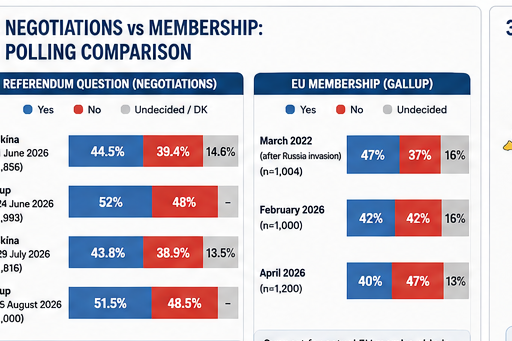
FIGURE 1 — NEGOTIATIONS ARE NOT MEMBERSHIP
CROSSWISE TAKEAWAY |
The political divide is geographical as well
Polling consistently points towards greater support for negotiations in Reykjavík and the wider capital area, with greater scepticism in parts of rural and coastal Iceland.
· roughly 59% YES in Reykjavík
· roughly 56% YES in neighbouring capital municipalities
· opposition stronger in several rural regions, particularly the east and north
· university graduates materially more supportive of reopening talks
Those regional figures should not be over-read to the decimal point: regional polling subsamples carry larger margins of error than the national sample. But the direction is consistent.
Iceland is already deeply integrated with Europe
The relevant comparison is not Iceland alone versus Iceland inside Europe. Iceland has participated in the European Economic Area since 1994. Through the EEA it participates extensively in the Single Market and the four freedoms: goods, services, capital and people. Iceland is also part of Schengen.
A substantial body of EU Single Market legislation is incorporated through the EEA framework. But Iceland does not possess seats in the European Parliament, votes in the Council of the European Union, membership of the European Council, or an Icelandic European Commissioner.
That creates the familiar accusation that Iceland is an EU rule-taker. There is truth in the description. But it is incomplete.
Iceland has influence under the EEA—just not the final vote
Icelandic officials participate in expert groups, preparatory processes, EFTA institutions, EEA committees, adaptation negotiations and the EEA Joint Committee. EEA-relevant legislation does not simply appear automatically in Icelandic law. It undergoes an incorporation process; adaptations can be negotiated; and some measures require domestic legal or constitutional procedures.
Iceland can help shape many EEA-relevant rules but lacks the formal vote of EU member states when the underlying EU legislation is ultimately adopted. |
Beware the claim that Iceland adopts “70%” or “80%” of EU law
Crosswise deliberately does not publish such a percentage. Different estimates use different denominators: all EU legislation, only Single Market legislation, directives, regulations, new acts, active acts, or EEA-relevant acts. A percentage without the denominator tells the reader very little.
Iceland is deeply exposed to EU Single Market regulation without full membership of the institutions making that regulation. |
The EEA excludes precisely some of the policies Iceland values most
The EEA does not integrate Iceland into several major EU policy systems, including the Common Fisheries Policy, Common Agricultural Policy, EU customs union, Common Commercial Policy and Economic and Monetary Union.
That is why the status quo is such a formidable competitor to accession. Iceland receives very deep economic integration while retaining unusually strong policy autonomy over sectors of exceptional domestic importance. The EEA is not necessarily an incomplete transitional arrangement. For Iceland, it may be an unusually favourable equilibrium.
Fisheries are the hardest unresolved issue
In 2025, marine products accounted for 38.9% of Iceland’s goods-export value. Their significance goes far beyond that statistic. Fisheries are bound up with coastal communities, national identity, export earnings, resource management and Iceland’s historical struggle to establish control over the waters surrounding it.
EU membership really would change Icelandic fisheries sovereignty
The EU treaties classify the conservation of marine biological resources under the Common Fisheries Policy as an exclusive EU competence. Under the current system, Iceland possesses national authority over fisheries policy. Full EU membership could not simply leave that legal architecture completely unchanged.
But the opposite slogan is also misleading: “Brussels would take Iceland’s fish.” EU fisheries operate through Total Allowable Catches, quota shares, relative stability, historic fishing patterns, scientific advice, coastal protections and negotiated arrangements. Membership would not automatically give every EU fishing vessel unrestricted access to Icelandic waters or every Icelandic quota.
Iceland would move from unilateral national competence to participation in an EU fisheries governance system whose precise Icelandic terms would have to be negotiated. |
The decisive fisheries negotiation never happened last time
Iceland applied for EU membership in 2009. Negotiations began in 2010. By the time talks were suspended in 2013, 27 negotiating chapters had been opened and 11 had been provisionally closed. But the crucial fisheries chapter—Chapter 13—was never opened. Iceland never submitted its final negotiating position on it. Agriculture also remained unresolved.
In March 2015, Iceland subsequently asked the EU not to regard it as a candidate country, although the precise constitutional and political status of the original application has remained a subject of debate.
The historical record cannot prove either that Brussels already rejected Iceland’s fisheries demands or that Iceland already proved it could get the deal it needs. The hardest bargain was never tested. |
Brussels is signalling flexibility—but not promising the outcome Iceland wants
The EU side has recently indicated that Iceland-specific arrangements can be discussed. EU Fisheries Commissioner Costas Kadis has publicly signalled room for flexibility and tailored arrangements, while the Commission has emphasised that candidate countries are assessed according to their particular circumstances.
That is meaningful evidence. It supports the proposition that an Iceland-specific fisheries settlement is negotiable. But it does not establish that Iceland can preserve its entire current fisheries regime. No concrete accession terms exist; no final quota structure exists; no permanent exemption has been agreed.
FISHERIES | MEANINGFUL ICELAND-SPECIFIC ARRANGEMENT — PLAUSIBLE |
Negotiations may proceed faster than ordinary EU accession talks
Iceland is unusual among accession candidates because it is already extensively aligned with EU Single Market rules through the EEA. Renewed negotiations could therefore proceed considerably faster than a typical enlargement process, although estimates vary and the full accession path would still require difficult chapters, treaty completion, domestic legal and constitutional steps, ratification and another public decision.
Agriculture creates another sovereignty trade-off
Agriculture is also substantially outside the EEA framework. Iceland protects domestic agricultural production through combinations of tariffs, import restrictions, domestic support and regulation. EU membership would integrate Iceland into the Common Agricultural Policy and materially alter that system. Farmers could gain access to EU support mechanisms, but domestic producers would also face greater European competition.
The króna makes sovereignty tangible
Currency turns an abstract argument about constitutional authority into something households can feel. On 19 August, the Central Bank of Iceland raised its policy rate to 8.00%, its third consecutive 25-basis-point increase. Icelandic inflation stood at 5.3% in July. The ECB deposit facility rate is 2.25%.
RATE GAP | 5.75 percentage points |
The króna has costs
A small floating currency can expose Iceland to exchange-rate volatility, imported inflation, hedging costs, financing uncertainty and potentially higher risk premia. The króna therefore makes monetary sovereignty visible in everyday economic life.
The króna also provides a genuine adjustment mechanism
Iceland’s 2008 financial crisis demonstrates that starkly. The króna collapsed, producing severe domestic consequences through inflation, imported-price shocks, balance-sheet damage and capital controls. But depreciation also helped compress imports, restore external competitiveness, increase domestic-currency export revenues and support broader economic adjustment.
Does the value of an Iceland-specific monetary adjustment mechanism exceed the normal-times costs of maintaining a volatile micro-currency? |
EU membership would not mean immediate euro adoption
New EU members—apart from Denmark’s treaty opt-out—are expected eventually to adopt the euro. But adoption requires additional stages including economic convergence, legal compatibility, participation in ERM II and fulfilment of the Maastricht criteria. There is no automatic immediate conversion. Sweden demonstrates that an EU member can remain outside the euro for decades.
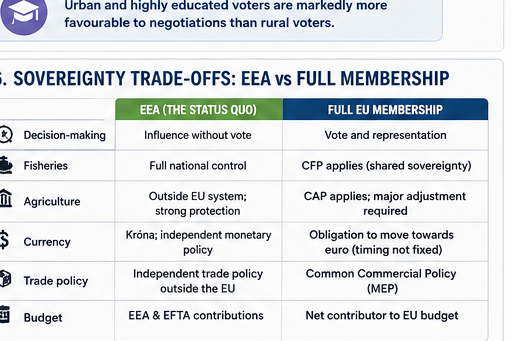
FIGURE 2 — WHAT ICELAND GAINS AND GIVES UP
CROSSWISE TAKEAWAY |
NATO already supplies Iceland’s core military guarantee
Iceland has been a NATO member since 1949. It has no standing army, but its military-security architecture includes NATO Article 5, allied air policing, the US–Iceland defence relationship, allied access to Keflavík, maritime surveillance and its role in the strategically important GIUK gap.
The EU could add a different kind of security
EU membership could strengthen Iceland’s participation in sanctions, economic-coercion instruments, critical-infrastructure policy, cyber regulation, investment screening, supply-chain resilience, energy policy, civil protection, defence-industrial cooperation and European strategic policymaking.
NATO is Iceland’s military-security anchor. The EU could deepen Iceland’s economic, regulatory and political security integration. |
Trump is not a sufficient explanation
International coverage naturally focuses on Donald Trump, Greenland, Arctic competition and US reliability. But the chronology is more complicated. Icelandic support for EU membership rose materially after Russia’s invasion of Ukraine in 2022, years before the present Greenland controversy. And when Icelanders were polled amid renewed transatlantic anxiety in early 2026, support for NATO remained exceptionally high while EU membership itself remained closely divided.
The evidence supports the proposition that geopolitics has changed the context of the referendum. It does not establish that Trump is driving Iceland into the EU. Nor does the evidence justify replacing that narrative with another monocausal story that Icelanders mainly want EU talks because mortgages are expensive.
02 — THE PERSPECTIVES
The central disagreement is often framed as more sovereignty versus less sovereignty. That is too simple. Both sides can plausibly claim to be defending Icelandic sovereignty. They disagree over which sovereign powers matter most.
THE CASE FOR NEGOTIATING: YOU CANNOT REJECT A DEAL YOU HAVE NEVER SEEN
Iceland should discover what accession would actually require before deciding whether that price is acceptable. The previous process never reached the decisive fisheries chapter; agriculture remained unresolved; and the eventual arrangements governing fishing rights, agricultural protections, budget contributions, transition periods, institutional participation and Iceland-specific derogations therefore never existed.
Strongest evidence: Negotiation support appears higher than membership support.
Strongest weakness: The information is not free.
THE PATH-DEPENDENCY CASE: NEGOTIATIONS ARE NOT JUST A FACT-FINDING EXERCISE
Accession negotiations consume political capital, diplomatic attention, civil-service capacity, party bandwidth and years of domestic debate. They can create expectations. Once a government reopens chapters, commits negotiating teams, reaches provisional agreements and builds institutional relationships, the political choice may no longer feel identical to the choice that existed beforehand.
Strongest evidence: A NO voter can rationally argue that reopening negotiations changes the political environment in which the option will later be judged.
Strongest weakness: The process can itself change Iceland’s politics.
THE CASE FOR THE EEA: ICELAND MAY ALREADY HAVE THE BETTER BARGAIN
Iceland is already deeply integrated with Europe. The EEA provides Single Market participation, free movement, broad regulatory integration and access to European programmes while Iceland remains outside the CFP, CAP, EMU, customs union and common commercial policy.
Strongest evidence: Marine products remain nearly 39% of goods exports, yet fisheries remain nationally governed.
Strongest weakness: The arrangement preserves autonomy partly by sacrificing formal EU decision-making power.
THE EFFECTIVE-SOVEREIGNTY CASE: A SEAT AT THE TABLE MATTERS
Iceland already accepts extensive European economic regulation yet has no MEPs, Council vote, Commissioner or seat in the European Council. EU membership would give Iceland formal representation, and small states can influence decisions through coalition building, committees, technical expertise, agenda setting, Council negotiations and institutional alliances.
Strongest evidence: The EEA creates regulatory exposure without equivalent formal voting rights.
Strongest weakness: Representation is not control.
THE RESOURCE-SOVEREIGNTY CASE: SOME POWERS ARE WORTH MORE THAN OTHERS
Fisheries are not merely one competence among hundreds. They concern marine resources, export earnings, coastal communities, national identity and decades of political struggle over maritime control. One highly valuable sovereign competence may be worth more than representation over many less consequential ones.
Strongest evidence: Fisheries remain economically and politically exceptional.
Strongest weakness: It assumes national unilateral control will always produce better outcomes than pooled authority.
THE KRÓNA CASE: MONETARY SOVEREIGNTY HAS A PRICE
For households, the sovereignty debate can appear as interest rates, inflation, currency movements, borrowing costs and business financing. The pro-euro argument asks what practical value an independent currency has if normal life repeatedly carries a monetary premium; the anti-euro response asks what happens when Iceland suffers a shock the euro area does not.
Strongest evidence: The current policy-rate gap is striking.
Strongest weakness: It is not proof of the answer.
THE GEOPOLITICAL CASE: SMALL STATES NEED SCALE
Russia’s war changed European security; the Arctic is more contested; North Atlantic infrastructure matters more; and US politics is less predictable. EU membership may offer a small state greater collective capacity in economic security, sanctions, infrastructure, cyber, supply chains and geopolitical bargaining.
Strongest evidence: The geopolitical environment is materially different from the previous accession debate.
Strongest weakness: Iceland already has NATO Article 5, and geopolitical anxiety has not translated cleanly into EU membership support.
03 — EVIDENCE CHECK
“Iceland is voting on joining the EU.”
CROSSWISE | FALSE / MISLEADING |
“A YES vote means Icelanders want EU membership.”
CROSSWISE | NOT SUPPORTED |
“YES simply buys information.”
CROSSWISE | PARTLY SUPPORTED / INCOMPLETE |
“Iceland follows EU rules without having a say.”
CROSSWISE | SUPPORTED WITH QUALIFICATION |
“Iceland adopts 70–80% of EU law.”
CROSSWISE | NOT ESTABLISHED AS A GENERAL CLAIM |
“EU membership increases Icelandic sovereignty.”
CROSSWISE | TOO SIMPLE |
“EU membership reduces Icelandic sovereignty.”
CROSSWISE | ALSO TOO SIMPLE |
“The EU would take Iceland’s fish.”
CROSSWISE | MISLEADING |
“Iceland could join while keeping its fisheries regime exactly unchanged.”
CROSSWISE | NOT SUPPORTED |
“Brussels already rejected Iceland’s fisheries position.”
CROSSWISE | FALSE / NOT ESTABLISHED |
“The EU has already promised Iceland a special fisheries deal.”
CROSSWISE | FALSE |
“Iceland can definitely obtain a full permanent CFP exemption.”
CROSSWISE | NOT ESTABLISHED |
“EU membership would give Iceland a military guarantee it lacks.”
CROSSWISE | MISLEADING |
“The EU adds nothing to Icelandic security.”
CROSSWISE | ALSO TOO STRONG |
“Trump is driving Iceland into the EU.”
CROSSWISE | NOT SUPPORTED |
“The referendum is mainly about high interest rates.”
CROSSWISE | NOT ESTABLISHED |
“EU membership means immediate euro adoption.”
CROSSWISE | FALSE |
“Joining the euro would automatically give Iceland ECB-level borrowing costs.”
CROSSWISE | FALSE / MISLEADING |
“The EEA already gives Iceland virtually everything economically valuable from EU membership.”
CROSSWISE | PARTLY SUPPORTED / UNRESOLVED |
04 — WHAT WE DON’T KNOW
1. The fisheries deal Iceland would actually receive
The previous talks never reached the decisive chapter. We therefore cannot know quota allocations, access arrangements, protocols, transition periods, management adaptations or permanent Iceland-specific provisions.
2. How far EU fisheries flexibility would really extend
Commission signals suggest room for tailored arrangements. Signals are not treaty text. The gap between willingness to be flexible and Iceland preserving the powers it considers non-negotiable could be very large.
3. Whether a comprehensive permanent fisheries carve-out is achievable
Crosswise can establish that full continuation of current unilateral competence would sit uneasily with normal CFP architecture. It cannot establish that an accession treaty could never create extensive permanent exceptions.
4. Whether negotiation supporters would eventually support membership
The current polling gap may disappear once terms exist. A strong fisheries arrangement could increase support; a poor one could destroy it.
5. How much negotiations themselves would change public opinion
Reopening talks may depolarise the issue by supplying facts or intensify polarisation by creating a live accession process.
6. The incremental economic value of EU membership over the EEA
Several apparently precise estimates failed verification. Crosswise cannot currently publish a reliable figure for net budget costs, seafood-tariff savings, FX savings, investment gains or total GDP effect.
7. How much of Iceland’s interest-rate differential is actually attributable to the currency regime
The current Iceland–ECB gap is large, but the economies are not experiencing identical inflation or conditions. The differential is not a clean experimental estimate of the “cost of the króna.”
8. Whether the euro would improve Icelandic welfare over a full economic cycle
Lower exchange-rate risk could help. Loss of independent adjustment could hurt during asymmetric shocks. 2008 demonstrates both mechanisms.
9. What is actually driving each voter
Crosswise has evidence on negotiations, membership, geography and education. It does not have credible quantitative evidence assigning exact weights to fisheries, mortgages, geopolitics, inflation or sovereignty.
10. How much influence Iceland would actually wield inside the EU
Formal representation is easy to identify. Practical influence is much harder to measure. A tiny state can sometimes exercise disproportionate influence; it can also lose votes.
05 — CROSSWISE ASSESSMENT
Iceland is not deciding whether to join the European Union. It is deciding whether reopening that possibility is worth the political and institutional cost of discovering the terms.
That distinction is fundamental. The EEA already gives Iceland an unusual bargain. It receives deep European economic integration, participates in the Single Market and benefits from European mobility and regulatory integration. But Iceland retains national authority over fisheries, agriculture, currency and trade policy.
That makes the status quo genuinely attractive. The anti-accession case therefore cannot reasonably be dismissed as a nostalgic defence of isolation. There is a serious argument that Iceland already possesses one of Europe’s most advantageous forms of partial integration.
But the arrangement also has a cost. Iceland participates in a regulatory system without the formal legislative rights of those sitting inside it. It can shape, negotiate adaptations and work through EFTA and EEA institutions, but it cannot vote in the Council or European Parliament on the underlying EU legislation.
EU membership would change that. Iceland would gain institutional voice. The price would not be abstract. Fisheries would enter EU competence. Agriculture would move into the CAP. Trade policy would become European. And membership would eventually place Iceland on a path towards the euro.
That is why asking whether Iceland would gain or lose sovereignty produces the wrong answer. It would do both. It would gain decision influence while surrendering some policy autonomy. The relative value of those two things varies enormously by domain.
The fisheries question makes the uncertainty unusually concrete. The EU side is publicly signalling flexibility. But no agreement exists. The previous accession process stopped before the decisive fisheries negotiation even began. So neither camp knows the actual price.
That is why the YES argument—find out the deal—is rational. But the red-team challenge matters too. Negotiation is not free information. Reopening accession talks requires political commitment, civil-service mobilisation, diplomatic attention and renewed institutional momentum. The process can itself change Iceland’s politics.
So the referendum does not simply ask whether knowledge has value. It asks whether acquiring that knowledge is worth reopening a process that may alter the choice later presented to voters.
Geopolitics complicates the calculation. Russia’s invasion changed European security politics. The Arctic matters more. US policy is less predictable. But Iceland already possesses NATO’s military guarantee, and uncertainty about America has not translated mechanically into support for EU membership.
The monetary argument is equally complicated. An independent currency gives Iceland genuine flexibility. It also carries costs. The current policy-rate gap with the euro area makes those costs visible, but it cannot be attributed solely to the króna—especially in a period when Iceland’s inflation and external energy environment differ materially from the euro area.
The clearest empirical finding therefore remains narrower: Icelanders appear somewhat more willing to negotiate than to join. The available surveys are not perfectly contemporaneous. The difference should not be exaggerated. But it is sufficient to reveal a coherent middle position: Show us the deal. Then ask us whether we want it.
CROSSWISE TAKEAWAY |
CROSSWISE CONFIDENCE
29 AUGUST IS NOT AN ACCESSION REFERENDUM | VERY HIGH |
SUPPORT FOR REOPENING NEGOTIATIONS APPEARS HIGHER THAN SUPPORT FOR MEMBERSHIP | MODERATE–HIGH |
THE EEA CREATES A GENUINE SOVEREIGNTY TRADE-OFF | HIGH |
FISHERIES ARE THE HARDEST UNRESOLVED ACCESSION ISSUE | HIGH |
ICELAND COULD PRESERVE ITS CURRENT FISHERIES REGIME COMPLETELY UNCHANGED | VERY LOW |
A COMPREHENSIVE PERMANENT FISHERIES CARVE-OUT IS IMPOSSIBLE | UNRESOLVED |
MEANINGFUL ICELAND-SPECIFIC FISHERIES ARRANGEMENTS COULD BE NEGOTIATED | MODERATE |
EU MEMBERSHIP WOULD MATERIALLY IMPROVE ICELAND’S MILITARY GUARANTEE | LOW |
EU MEMBERSHIP COULD STRENGTHEN ECONOMIC AND REGULATORY SECURITY | MODERATE–HIGH |
TRUMP/GEOPOLITICAL INSECURITY IS THE PRIMARY REFERENDUM DRIVER | LOW–MODERATE |
CURRENCY/COST-OF-LIVING IS THE PRIMARY DRIVER | MODERATE / NOT ESTABLISHED |
THE KRÓNA IMPOSES COSTS WHILE RETAINING GENUINE SHOCK-ABSORBER VALUE | HIGH |
THE EEA CAPTURES A LARGE SHARE OF THE ECONOMIC BENEFITS OF EUROPEAN INTEGRATION | HIGH DESCRIPTIVELY |
WHAT WOULD CHANGE OUR ASSESSMENT?
A concrete fisheries offer
A formal EU proposal preserving substantially more—or less—Icelandic control than presently assumed would immediately alter the sovereignty calculation.
Negotiation and membership polling converge
If support for talks and membership become virtually identical, the price-discovery interpretation weakens. If the gap expands, it strengthens.
Exit polling reveals one dominant motive
If voters overwhelmingly identify fisheries, interest rates, security or another single issue, the present multi-causal assessment would need revision.
NATO reliability materially deteriorates
A serious reduction in US or allied North Atlantic commitments would increase the security value of deeper European integration.
A structural króna crisis
Sustained double-digit inflation, serious capital flight or a collapse in monetary credibility would materially strengthen the euro case.
Iceland sustainably lowers inflation and rates while retaining the króna
That would weaken the argument that a small independent currency necessarily imposes an enduring monetary burden.
A credible EEA-versus-EU economic study identifies large incremental effects
Robust evidence of substantial gains—or losses—from full membership would increase the weight of the economic argument.
Negotiations themselves reveal the answer
Ultimately this is the central falsification condition. The referendum is partly about acquiring information. Once actual terms exist, much of the present uncertainty disappears.
CROSSWISE RADAR
EUROPE · INDUSTRIAL POLICY
Europe’s second China shock is becoming a competitiveness problem rather than simply a tariff problem.
Why it matters: Tariffs can alter trade flows but cannot by themselves solve European energy, investment or productivity weaknesses.
What to watch: Whether policy moves from product-specific trade defence towards protection of selected industrial capabilities.
INDONESIA · CHINA
Jakarta’s multi-alignment model remains under pressure.
Why it matters: Diversification can preserve autonomy—or simply distribute dependencies across more partners.
What to watch: Ownership, technology-transfer and supply-chain terms in the proposed munitions cooperation.
ARCTIC SHIPPING
China’s seasonal Arctic service is entering its commercial test.
Why it matters: Transit time alone does not establish commercial viability.
What to watch: Load factors, eastbound cargo, insurance, reliability and whether service expands in 2027.
GLOBAL BONDS
Long-term yields remain a warning without becoming a sovereign funding crisis.
Why it matters: Fiscal deterioration can be priced gradually without classical crisis signals.
What to watch: Auction tails, dealer participation, foreign demand and persistent US yield decoupling.
THE RECEIPTS
Research cut-off: 24 August 2026
RESEARCH LEDGER
· 42 source items materially examined
· 9 core independent evidentiary chains
· 16 primary / official records
· 14 specialist Icelandic / Nordic sources
· 12 independent reporting items
· 18 key claims explicitly tested
· 11 material uncertainties retained after hostile red-team adjudication
Source categories overlap and should not be added mechanically. A source item is not equivalent to an independent evidentiary chain.
HOW CROSSWISE COUNTS
Crosswise does not treat repetition as corroboration. If several news organisations report the same Gallup survey, that remains one Gallup evidentiary chain. If multiple campaigners repeat an estimate about the percentage of EU law incorporated through the EEA but ultimately rely on the same calculation and denominator, that remains one underlying claim.
Crosswise also separates four dimensions often collapsed into the word sovereignty:
· LEGAL SOVEREIGNTY — Who formally possesses legislative competence?
· POLICY AUTONOMY — How freely can Iceland choose policy independently?
· DECISION INFLUENCE — How much formal say does Iceland have over decisions affecting it?
· STATE CAPACITY — How effectively can Iceland achieve national objectives alone or collectively?
PRIMARY & OFFICIAL RECORDS
1. Alþingi — Referendum legislation and parliamentary materials
· referendum procedure
· wording
· parliamentary process
· distinction between reopening negotiations and accession
2. Government of Iceland — Referendum and EU information
· government process
· intended consequences of a YES vote
· accession history
· anticipated democratic pathway
3. European Commission — Iceland accession record
· 2009 application
· negotiation history
· chapters opened
· chapters provisionally closed
· suspension of talks
4. Icelandic Government / Foreign Affairs archives
· Chapter 13 Fisheries was never opened
· Iceland never submitted its final fisheries position
· agriculture remained unresolved
5. EFTA / EEA institutional documentation
· EEA incorporation
· preparatory participation
· adaptation mechanisms
· EEA Joint Committee
· Iceland’s lack of formal EU voting rights
6. Statistics Iceland
· Marine products represented 38.9% of Iceland’s goods-export value in 2025
7. Central Bank of Iceland
· monetary policy
· policy-rate changes
· Icelandic inflation context
· policy rate raised to 8.00% on 19 August 2026
8. European Central Bank
· euro-area policy rates
· euro-convergence framework
· deposit facility rate used in the article
9. EU Treaties / EUR-Lex
· EU competence over conservation of marine biological resources
· accession obligations
· institutional architecture
10. European Parliament CFP documentation
· quota systems
· relative stability
· access principles
· coastal protections
11. NATO
· Iceland’s NATO membership
· Article 5
· alliance defence architecture
12. Iceland–United States defence framework
· Keflavík
· bilateral defence cooperation
· North Atlantic security
13. Icelandic electoral authorities
· electoral procedure
· voting administration
14. OECD agricultural-policy material
· agricultural protection and support
· used to reject a misleading subsidy percentage
15. European Commission enlargement documentation
· accession architecture
· negotiating chapters
· candidate-specific adaptations
· procedural implications
16. EU / ECB convergence framework
· EU membership does not mean immediate euro adoption
SPECIALIST ICELANDIC / NORDIC SOURCES
17. Gallup Iceland — membership polling, NATO attitudes and public opinion
18. Maskína — referendum question, decided-voter preferences, geographic and demographic patterns
19. Icelandic constitutional/legal scholarship — sovereignty transfer and constitutional accommodation
20. University of Iceland / Institute of International Affairs — Iceland–EU relations, EEA governance and small-state sovereignty
21. Icelandic fisheries research — fisheries governance and economic context
22. Icelandic monetary research — króna/euro debate
23. Nordic EEA scholarship — rule-shaping, representation and autonomy
24. Norway / EEA comparative research — durability and trade-offs of the EEA model
25. Fisheries-law research — CFP competence, derogations and accession arrangements
26. Small-state monetary research — exchange-rate flexibility, currency risk and asymmetric shocks
27. Iceland financial-crisis research — króna adjustment in 2008
28. Arctic / North Atlantic security research — Russia, Greenland, GIUK gap and critical infrastructure
29. European economic-security research — NATO military security versus EU economic/regulatory security
30. Icelandic agricultural research — CAP exposure and rural political concerns
INDEPENDENT REPORTING
31. RÚV — referendum procedure, polling, campaign positions, constitutional debate, fisheries and currency
32. Vísir — polling and campaign developments
33. DV — Maskína polling detail and demographic breakdowns
34. Morgunblaðið — domestic sceptical arguments and political debate
35. Heimildin — institutional and domestic political context
36. AP — international framing
37. Reuters — broader geopolitical and European context
38. Nordic regional reporting — Nordic comparison and EU politics
39. European political reporting — accession and institutional context
40. Fisheries reporting — industry and market context
41. Monetary / financial reporting — Icelandic rate and currency debate
42. Arctic security reporting — US policy, Greenland and Arctic insecurity
THE KEY CLAIMS CROSSWISE TRIANGULATED
CLAIM 1 | FALSE / MISLEADING |
CLAIM 2 | STRONGLY SUPPORTED |
CLAIM 3 | SUPPORTED WITH POLLING-METHOD QUALIFICATION |
CLAIM 4 | SUPPORTED |
CLAIM 5 | FALSE / INCOMPLETE |
CLAIM 6 | SUPPORTED |
CLAIM 7 | OVERSTATED |
CLAIM 8 | SUPPORTED |
CLAIM 9 | MISLEADING |
CLAIM 10 | STRONGLY SUPPORTED |
CLAIM 11 | FALSE |
CLAIM 12 | NOT SUPPORTED |
CLAIM 13 | MISLEADING |
CLAIM 14 | NOT SUPPORTED |
CLAIM 15 | NOT ESTABLISHED |
CLAIM 16 | MISLEADING |
CLAIM 17 | NOT SUPPORTED |
CLAIM 18 | FALSE |
WHAT WE COULD NOT OBTAIN
· the fisheries settlement Brussels would actually offer
· a legally binding promise guaranteeing or excluding a comprehensive permanent CFP carve-out
· a denominator-safe percentage for the amount of “EU law” Iceland currently implements
· a robust GDP estimate for moving from the EEA to EU membership
· a publication-grade annual seafood-tariff saving estimate
· a robust net EU-budget contribution estimate
· a defensible figure isolating the portion of Iceland’s current interest-rate differential caused specifically by the króna
· a clean representative Iceland-versus-euro-area household mortgage comparison
· a reliable annual GDP estimate for currency hedging costs
· a single quantitative welfare estimate for eventual euro adoption
· a verified ranking assigning exact percentages of voters to fisheries, mortgages, security or sovereignty motivations
· evidence showing how negotiation supporters will vote once actual accession terms exist
Those uncertainties are retained rather than filled with estimates.
RADAR SOURCES
EUROPE · INDUSTRIAL POLICY
Eurostat; ECB; European Commission; European industrial-policy research; independent European business reporting.
INDONESIA · CHINA
Indonesian government; Chinese government; Australian, US and Japanese defence documentation; BPS; SIPRI; specialist defence reporting.
ARCTIC SHIPPING
Sea Legend; Rosatom / Northern Sea Route Administration; Centre for High North Logistics; Suez Canal Authority; specialist maritime reporting.
GLOBAL BONDS
US Treasury; Federal Reserve; auction records; sovereign-market data; independent financial reporting.
FOUND SOMETHING WE MISSED?
Crosswise welcomes evidence that challenges its conclusions. If you possess a primary document, dataset, poll, legal opinion, negotiating record or other material evidence that could materially alter this assessment:
editor@readcrosswise.com |
Material factual errors will be corrected transparently rather than silently amended.
CROSSWISE
THE FACTS. THE PERSPECTIVES. THE EVIDENCE. THE UNKNOWNS. OUR ASSESSMENT.
One consequential