
On 7 August, three of the Muslim world’s largest militaries agreed that an attack on one would be treated as an attack on all. The sentence is real, and it is not small. Whether it amounts to an alliance is a different question — and it turns less on what these governments have promised than on what they can actually execute together, and on what they will still choose to do when the price of the promise comes due.
31 AUGUST 2026 • SECURITY & DEFENCE • PILOT #010
WHY THIS STORY
On 7 August, in Makkah, the leaders of Turkey, Saudi Arabia and Pakistan signed a single sentence into the strategic record: an armed attack against any one of them would be regarded as an attack against all three. Read the three names again. Turkey fields the second-largest army in NATO. Saudi Arabia is among the largest defence spenders on earth. Pakistan is the only Muslim-majority state that holds nuclear weapons. No arrangement had ever bound that particular trio before.
Within hours the shorthand arrived: a Muslim NATO. The phrase is understandable. It is also misleading, and the precise shape of the mistake is what this edition is about.
NATO’s deterrent power was never carried by a sentence. Behind Article 5 stand seventy years of integrated commands, common standards, assigned forces, contingency plans, shared intelligence, joint logistics, constant exercises and an explicit nuclear doctrine. That apparatus is the deterrent; the treaty language only names it. Makkah has the language. Whether it has begun to build the apparatus — or ever will — is the open question.
And there is a harder question beneath that one. Alliances are easy to sign while interests align. They are tested when interests part. The measure of this pact is not the warmth of the ceremony in Makkah but a colder thing: who, exactly, is prepared to fight for whom — and against whom — on the day doing so costs something.
RESEARCH SUMMARY
Three findings hold. The first is solid. The collective-defence declaration is genuine: official accounts from the signatories state plainly that an attack on one member is to be treated as an attack on all three. That is more than routine defence cooperation, and we can stand behind it.
The second is where the story turns. The machinery beneath the declaration is nascent, or simply not yet visible. The pact creates a Strategic Political and Defence Committee, and the governments have announced intentions — deeper military mechanisms, exercises, interoperability, technology, joint production. Announced. What the public record does not show is a single integrated command, forces assigned to the alliance, mature combined war plans, or a fused intelligence and air-defence picture. Intention is not yet capability.
The third concerns the weapon in the room. Pakistan’s nuclear arsenal makes this pact different in kind from an ordinary regional understanding — though not in the way the word umbrella implies. No published trilateral doctrine commits Pakistani warheads to the defence of Riyadh or Ankara. What exists, in the Saudi case, is something looser and older: a set of unusually suggestive signals from Islamabad, left deliberately unresolved.
Taken together, they place Makkah between the two easy verdicts — neither a second NATO nor mere theatre, but an alliance in its first phase, its promise running well ahead of its machinery, its deepest vulnerability perhaps not military at all, but political.
01 — WHAT WE KNOW
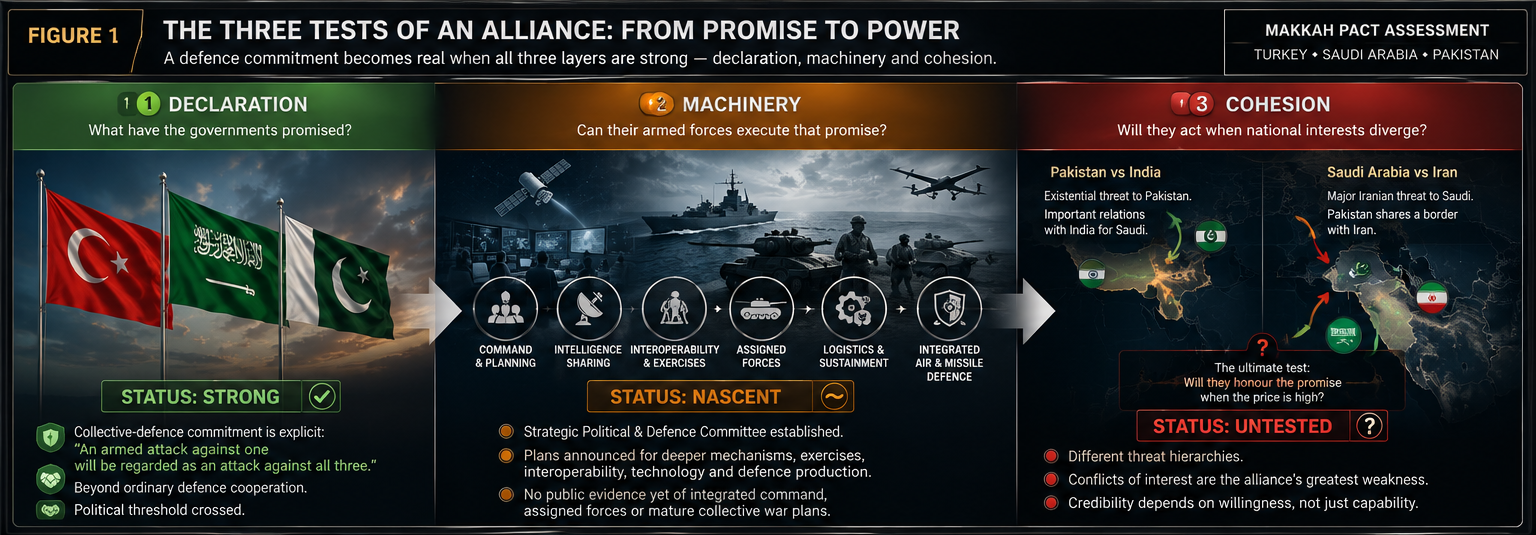
FIGURE 1 | The three tests of an alliance
The collective-defence language is genuine
The signatories are explicit. An armed attack against Turkey, Saudi Arabia or Pakistan is to be regarded as an attack against all three. That single clause lifts Makkah out of the ordinary run of defence-cooperation memoranda. The catch is that the clause is nearly all we can see. The full agreement has not been published.
So we will verify what the record verifies, and refuse to invent the rest. We do not know what assistance the treaty actually compels, whether force is mandatory or discretionary, where its geography ends, how it treats cyber or proxy attacks, or what domestic approvals must clear before anyone moves. Treating an attack as shared is not the same as going to war over it automatically, and the distance between those two ideas is the whole of the machinery question. We will not paper over that distance with clauses we cannot read. The restraint is not timidity. It is the finding.
A defence alliance has more than one layer
An alliance can be read on three layers, and they do not mature at the same pace. Declaration is what the governments have promised; here Makkah is strong. Machinery is whether their armed forces can carry the promise out together; here the evidence is thin. Cohesion is whether they will honour it when honouring it collides with another national interest they hold dear; here the alliance has never once been tested. Hold those three apart, and most of the confusion about this pact dissolves.
Institutions are beginning to appear
Something is being built. The pact stands up a Strategic Political and Defence Committee, and the three governments have set out an agenda: deeper military mechanisms, joint exercises, interoperability, unmanned systems, electronic warfare, artificial intelligence, defence technology, defence production. None of that is trivial. None of it should be mistaken for the thing itself. An agenda is a statement of intent. It is not a capability.
At our research cut-off, the public record showed no permanent integrated trilateral headquarters, no forces standing assigned to the alliance, no mature combined planning architecture. The honest formulation is the modest one: the machinery is being proposed, and in places begun — not that an integrated military system already exists.
The alliance does not begin from zero
None of this starts from nothing. Turkey and Pakistan have decades of military and defence-industrial partnership. Pakistan and Saudi Arabia have a security relationship older than most of the region’s borders. Turkey and Saudi Arabia have lately built out their defence-industrial ties at speed. Makkah is an attempt to weld an existing triangle of bilateral bonds into one structure.
A triangle is not yet a system. Three strong two-way relationships can share exercises, procurement and training without ever producing a common command, a common doctrine or a shared intelligence picture. The join is exactly where the work now has to happen — and exactly where the public record goes quiet.
Defence industry may mature faster than war-fighting integration
If any part of this moves first, it will probably be industry. Saudi Arabia brings capital and a procurement appetite; Turkey brings a deep indigenous arms sector; Pakistan brings scale and production capacity. The logic almost assembles itself. But most of the real industrial depth still runs along the bilateral channels, two countries at a time. The test worth watching is narrow and concrete: the first programme in which all three states put money, factories and engineers into the same project at once.
02 — THE PERSPECTIVES
PERSPECTIVE A — A real alliance does not need to look like NATO on day one
Alliances begin as political decisions; the machinery is built afterward, in the years the cameras miss. Because these three already know how to work together in pairs, integration could move faster here than it would among strangers. Should permanent planning bodies, combined exercises, shared air defence, intelligence exchange and common procurement actually follow, August 2026 will read, in hindsight, as the founding date of a serious alliance architecture. Evidence weight: MODERATE–HIGH.
PERSPECTIVE B — Article 5 language without Article 5 capability
NATO frightens an adversary because behind its treaty stands a machine that already plans, trains and fights as one. Makkah has shown no such machine. Nor do its three members share a single ranked list of enemies — and an alliance whose members fear different things, in a different order, is harder to move as one body. Article 5 language is not Article 5 capability. Evidence weight: HIGH.
PERSPECTIVE C — Security layering, not American replacement
Riyadh has not walked away from Washington. Ankara has not left NATO. Islamabad has not abandoned Beijing. What the three are doing is adding a security relationship alongside the ones they already keep — a hedge, not a divorce. It may be an early instance of a wider habit among middle powers: holding several overlapping guarantees rather than trusting a single patron. Evidence weight: HIGH as a reading of intent; LOW that the pact is designed to replace the United States.
PERSPECTIVE D — The alliance’s real weakness is cohesion
Pakistan’s strategic life is organised around India — and Saudi Arabia keeps a substantial relationship with New Delhi that it has no wish to spend. Saudi Arabia lives with a serious Iranian threat — and Pakistan shares a long border with Iran, and every reason to avoid being pulled onto the Gulf’s front line. These are not forecasts. They are stress tests, and they point at the same seam: a guarantee means nothing until the day it is expensive, and it is precisely on that day that these three interests pull in different directions.
03 — THE NUCLEAR QUESTION
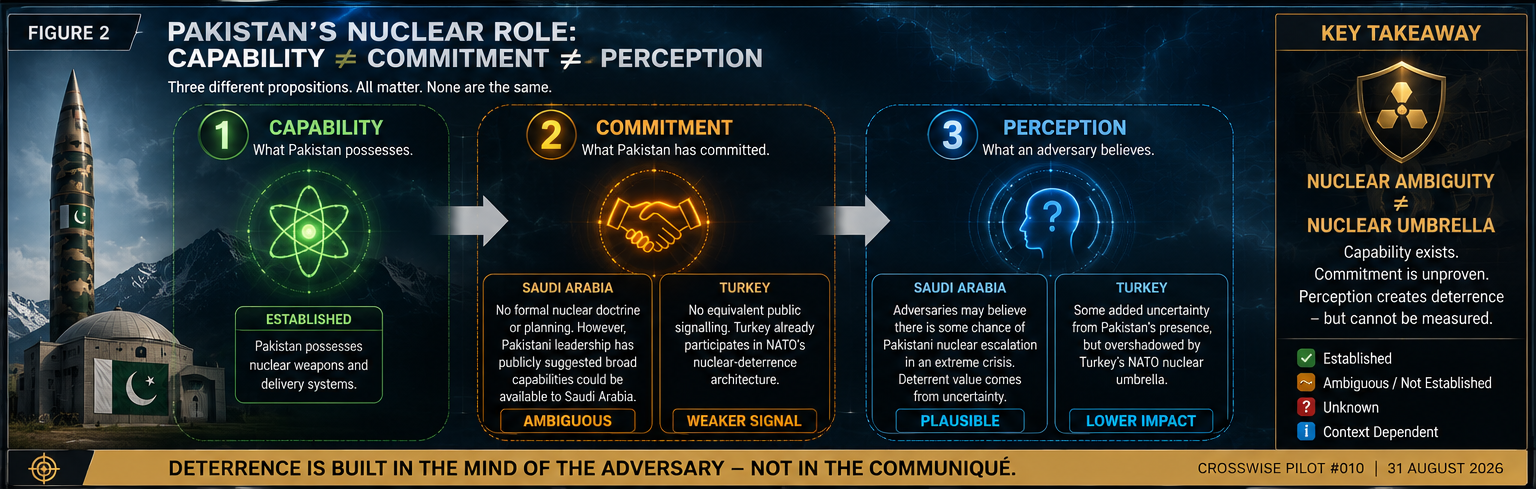
FIGURE 2 | Pakistan’s nuclear role: capability, commitment and perception
Pakistan changes the arithmetic. It holds nuclear weapons; its two partners do not. From that asymmetry comes the tempting inference that Islamabad has thrown a nuclear umbrella over Riyadh and Ankara. The public evidence does not carry the inference.
There is no verified trilateral nuclear doctrine, no joint planning cell, no consultation body, no targeting arrangement, no sharing scheme. There is no public evidence that Pakistani weapons sit on Saudi soil. On the formal architecture of extended deterrence, the record is empty.
What is not empty is the political register. After the earlier Saudi–Pakistan defence agreement, Pakistan’s defence minister, Khawaja Asif, said publicly that his country’s capabilities would be made available to Saudi Arabia if required — a remark widely heard as reaching for the nuclear deterrent. Later messaging pulled back toward ambiguity. That is not an institutional guarantee. It is something subtler, and for an adversary running its own calculations, not nothing: a genuine uncertainty, deliberately left standing.
For Turkey the signal is fainter still. No comparable Pakistani statement has extended anything specifically to Ankara — which, in any case, already sits inside NATO’s own nuclear arrangements, and needs a Pakistani umbrella less than Riyadh might.
Read on three registers, the nuclear question clarifies. Capability — what Pakistan physically holds — is established. Commitment — what Pakistan has formally promised its allies — is not. Perception — what an adversary believes might happen in extremis — is plausible around Saudi Arabia and cannot be measured from open sources. Deterrence, in the end, is manufactured in the mind of the adversary, not in the text of a communiqué.
04 — NATO DOES NOT TRANSFER THROUGH TURKEY
One inference can be closed off cleanly. Saudi Arabia and Pakistan do not acquire NATO’s Article 5 protection because Turkey happens to belong to both arrangements. There is no chain running from an attack on Riyadh to an obligation in Brussels. Membership does not travel through a member.
The complication runs the other way. Suppose Turkey acts on its Makkah commitment, commits forces, and those forces are then attacked. Now the NATO question is live, and its answer depends entirely on the scenario. Makkah does not enlarge NATO by a single square metre. What it can do is hand a major NATO member a harder alliance-management problem than it had the week before.
05 — EVIDENCE CHECK
• “An attack on one is treated as an attack on all.” — SUPPORTED. Confirmed in official accounts.
• “The pact automatically requires all three states to go to war.” — NOT ESTABLISHED. The full assistance provisions are not public.
• “The pact is already a Muslim NATO.” — MISLEADING. Collective-defence language exists; NATO-level military integration does not.
• “The agreement is merely symbolic.” — OVERSTATED. The declaration and institutional plans go beyond symbolism.
• “The three militaries already operate under one command.” — NOT SUPPORTED. No public evidence of an integrated trilateral command.
• “Pakistan has given all three countries a nuclear umbrella.” — NOT ESTABLISHED. No public trilateral extended-deterrence doctrine.
• “Pakistan’s nuclear weapons are irrelevant to the pact.” — TOO STRONG. Prior Saudi–Pakistan signalling creates strategic ambiguity.
• “Pakistani nuclear weapons are stationed in Saudi Arabia.” — NO PUBLIC EVIDENCE.
• “Saudi Arabia and Pakistan now have NATO protection through Turkey.” — FALSE.
• “The pact is an anti-Iran alliance.” — NOT ESTABLISHED.
• “The pact is an anti-Israel alliance.” — NOT ESTABLISHED.
• “The alliance replaces US security relationships.” — NOT SUPPORTED.
• “The three states already possess a common defence-industrial base.” — OVERSTATED. Strong bilateral links exist; trilateral integration is developing.
• “Egypt has joined.” — FALSE / NOT ESTABLISHED.
06 — WHAT WE DON’T KNOW
• What assistance is actually mandatory under the unpublished full agreement.
• Whether armed force is ever automatic, and what geographic, cyber, proxy or maritime triggers apply.
• What classified military planning, intelligence-sharing or contingency arrangements may already exist.
• What the Strategic Political and Defence Committee will become in practice.
• Whether dense bilateral defence relationships will become genuinely trilateral.
• Whether any confidential Saudi–Pakistani nuclear understanding exists.
• Whether Saudi Arabia would materially assist Pakistan in a major conflict with India.
• Whether Pakistan would materially assist Saudi Arabia in a major confrontation with Iran.
• How NATO would handle a Turkish intervention under Makkah if Turkish forces were later attacked.
• Which additional states, if any, will formally join the arrangement.
07 — CROSSWISE ASSESSMENT
The easy question — is this another NATO? — is also the wrong one. The answer is no, not today, and the answer tells you very little. Insignificance does not follow from falling short of NATO.
What these three governments have done is cross a political threshold in public. They have tied their security together with a sentence an adversary now has to price in. That alone changes the strategic weather, before a single new headquarters is poured in concrete.
Return to the three layers. Declaration is strong. Machinery is nascent. Cohesion is untested — and cohesion is the layer that will decide this. The members rank their threats differently, and the alliance has not yet met the crisis in which keeping the promise means giving something else up.
Pakistan’s arsenal adds a layer of uncertainty, sharpest in the Saudi case. But uncertainty is not an umbrella, and nothing in the open record lets us describe these three as operating under one nuclear doctrine.
So the fair description is neither grand nor dismissive: an emerging collective-defence alliance — firmer than symbolism, softer than a mature integrated bloc, and consequential precisely because its trajectory is still unwritten.
Everything narrows to a single question. Will they defend one another when defending one another means sacrificing something they value?
Until that question meets a real crisis, the declaration stands — loud, and genuine — and the guarantee behind it stays untested.
CONFIDENCE
• Collective-defence declaration authentic — VERY HIGH
• Best classification: emerging collective-defence alliance — HIGH, qualified
• Exact legal assistance obligation known — LOW
• Armed military response automatic — LOW / NOT ESTABLISHED
• SPDC represents institutional intent — HIGH
• Integrated trilateral command exists — VERY LOW / NOT PUBLICLY DEMONSTRATED
• Standing trilateral forces exist — VERY LOW
• Mature combined contingency plans exist — LOW / NOT PUBLICLY DEMONSTRATED
• Defence-industrial cooperation will be important — HIGH
• Pakistan formally provides Saudi Arabia a nuclear umbrella — LOW / NOT ESTABLISHED
• Saudi–Pakistan nuclear ambiguity is strategically meaningful — MODERATE–HIGH
• Pakistan formally provides Turkey a nuclear umbrella — VERY LOW
• Saudi Arabia/Pakistan inherit NATO Article 5 through Turkey — VERY LOW / FALSE
• Turkey’s overlapping commitments can create NATO entanglement — MODERATE–HIGH
• Pact is formally anti-Iran — LOW
• Pact is formally anti-Israel — LOW
• Pact adds another regional security layer — HIGH
• Divergent national threat priorities are a major structural weakness — HIGH
• “Muslim NATO” accurately describes it today — VERY LOW
WHAT WOULD CHANGE OUR ASSESSMENT?
A published treaty with a weak or highly discretionary assistance clause would lower our confidence in the alliance reading; an explicit, mandatory armed-response obligation would raise it. A permanent trilateral headquarters, assigned forces, combined contingency plans, or integrated air and missile defence would push the machinery from nascent toward operational. An explicit Pakistani nuclear guarantee — or an explicit exclusion of nuclear forces — would rewrite the nuclear section entirely. Above all of it: the first real crisis, which will tell us in a week what the treaty text cannot — whether the promise survives contact with divergent national interests.
CROSSWISE RADAR
SOUTH CHINA SEA — WHAT DOES ANTELOPE REEF ACTUALLY ADD?
Fresh Chinese construction in the Paracels photographs well, and acreage is the wrong metric. The question that matters is marginal: what does the new ground actually add — radar coverage, sortie generation, missile reach, redundancy — beyond what the existing positions already deliver? We will be measuring capability, not square footage.
VENEZUELA — WHO ACTUALLY CONTROLS 65 BILLION BARRELS?
Washington says it has won extraordinary influence over Venezuelan oil. Caracas says its sovereignty is untouched. Both can be speaking truthfully if legal ownership, operating control and offtake rights are quietly being run together as though they were one thing. We will pull them apart.
EUROPEAN GAS — DIVERSIFICATION OR CHOKEPOINT DEPENDENCE?
Europe has genuinely cut its dependence on Russian pipeline gas. A disruption to Qatari LNG would pose the next question in the sequence: whether diversifying suppliers has simply relocated the vulnerability onto a handful of maritime chokepoints and terminals. Diversification and concentration are not opposites.
THE RECEIPTS
This edition rested on four kinds of source, each used for what it can honestly bear. Official Pakistani and Turkish records established the public collective-defence wording and the institutional announcements. Independent reporting reconstructed the chronology and the announced military mechanisms. Specialist strategic analysis pressure-tested the NATO comparison and the nuclear implications. NATO treaty material anchored the distinction between a Makkah commitment and Articles 5 and 8.
Where many outlets carried the same underlying statement, we counted it once — one chain of evidence, not a crowd of confirmations. Government statements were read as evidence of what governments wish to say, not as independent proof that it is so.
The largest limitation is the plainest: the full Makkah Joint Defence Agreement is not public. We therefore make no claim about the exact assistance clause, whether military intervention is mandatory, the geographic limits, the cyber or proxy thresholds, the ratification provisions, or any classified contingency planning. Where the evidence is silent on integrated command or nuclear planning, we have written “not publicly demonstrated” — never “proven not to exist.” The gap between those two phrases is the gap between analysis and assertion.
CROSSWISE VERDICT
Turkey, Saudi Arabia and Pakistan have said that an attack on one will be treated as an attack on all. That sentence, on its own, makes Makkah matter.
But a guarantee has three parts. Declaration is what a government tells an adversary it will do. Machinery is whether its military can actually do it. Cohesion is whether it still chooses to, on the day the choice turns costly.
Makkah is strong on the first, only beginning on the second, and wholly untested on the third.
Pakistan’s arsenal adds uncertainty, most of it gathered over the Saudi relationship. Uncertainty, though, is not an umbrella, and there is no public basis for treating these three as sheltering under one nuclear doctrine.
Take the agreement, then, for what it is: a new and potentially consequential collective-defence alliance whose political promise has run out ahead of its military machinery, and whose ultimate credibility will rest on whether three states with very different priorities are willing to pay the price of defending one another.
That is a larger, and far less settled, development than “Muslim NATO” will ever capture. The phrase flatters the pact by making it sound finished. It is